Real project photos are the best way to compare concrete curbing profiles, colors and how a continuous poured border follows an existing landscape. These Coastal Edge Curbing examples show completed work from Hampton Roads and the surrounding region so homeowners can see the difference between a simple mower edge, a darker stamped border and a broader decorative layout.
Curved mower edge with a natural finish
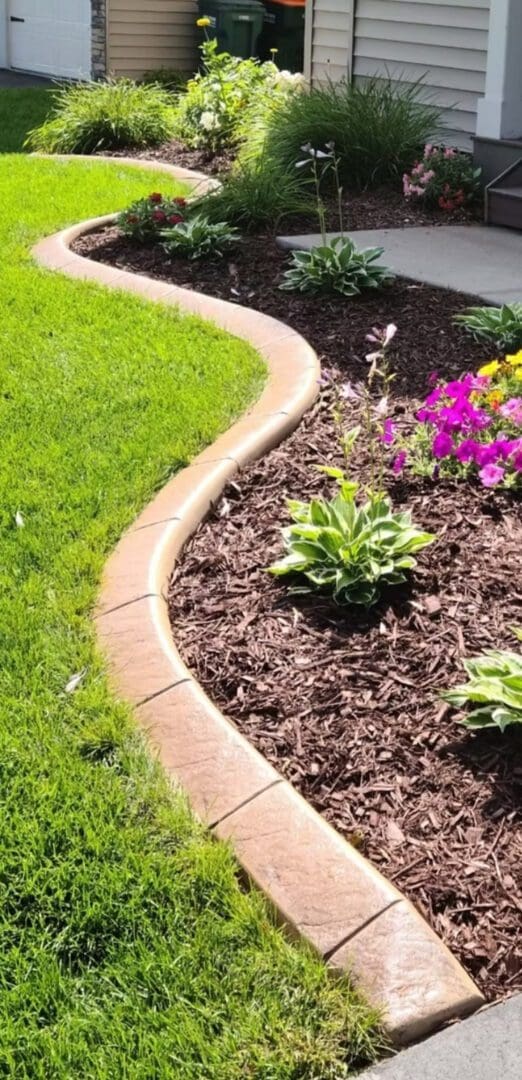
This example shows why concrete landscape curbing is useful around curved beds. The curb creates a clean lawn-to-bed transition without relying on short loose pieces that can move out of line. A more natural finish keeps the border visible without making it compete with the planting area.
- Best fit: flower beds, front landscape borders and curved bed lines.
- Planning note: gradual curves should be marked on site so the border follows the actual lawn line.
- Related guide: flower bed concrete edging.
Stamped charcoal front-bed border
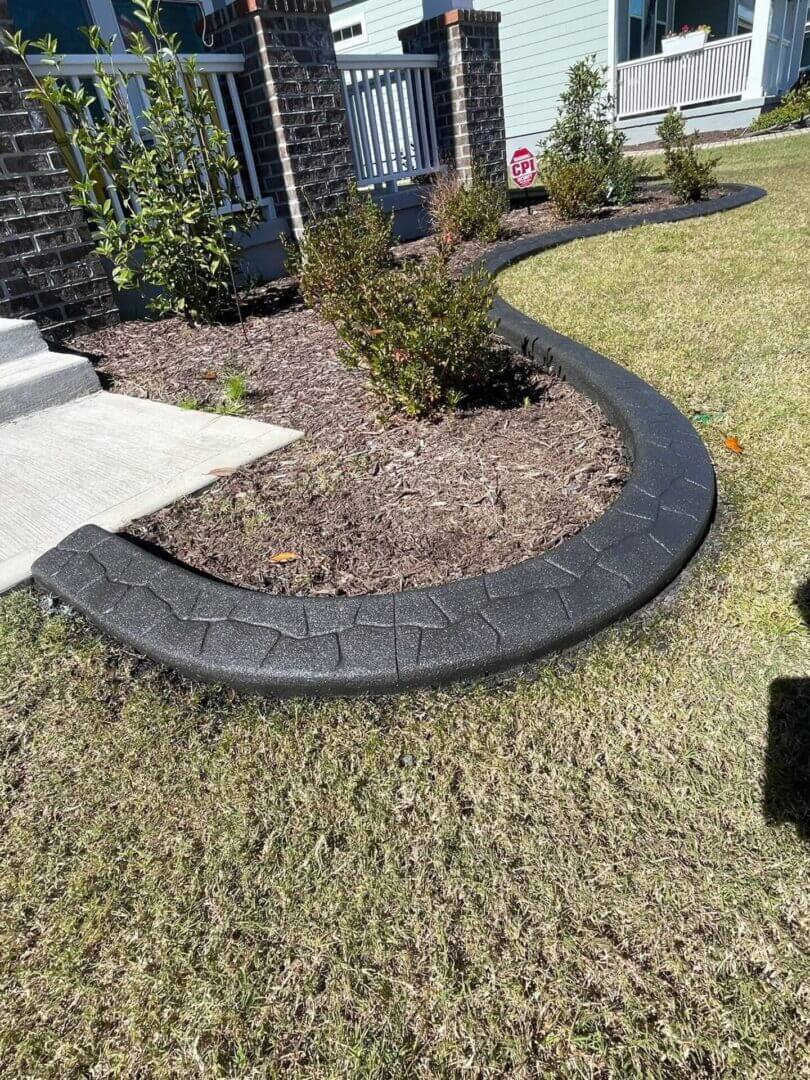
The charcoal tone creates contrast against lawn, mulch and lighter landscape material. Stamped texture gives the curb a more decorative appearance, which makes this kind of finish a better fit for high-visibility front beds, entry areas and curb-appeal projects.
- Best fit: front foundation beds, accent beds and areas where the border should be visible from the street.
- Planning note: color should be compared against siding, brick, stone, concrete, pavers and mulch before installation.
- Related guide: decorative concrete curbing options.
Continuous decorative curbing in Toano
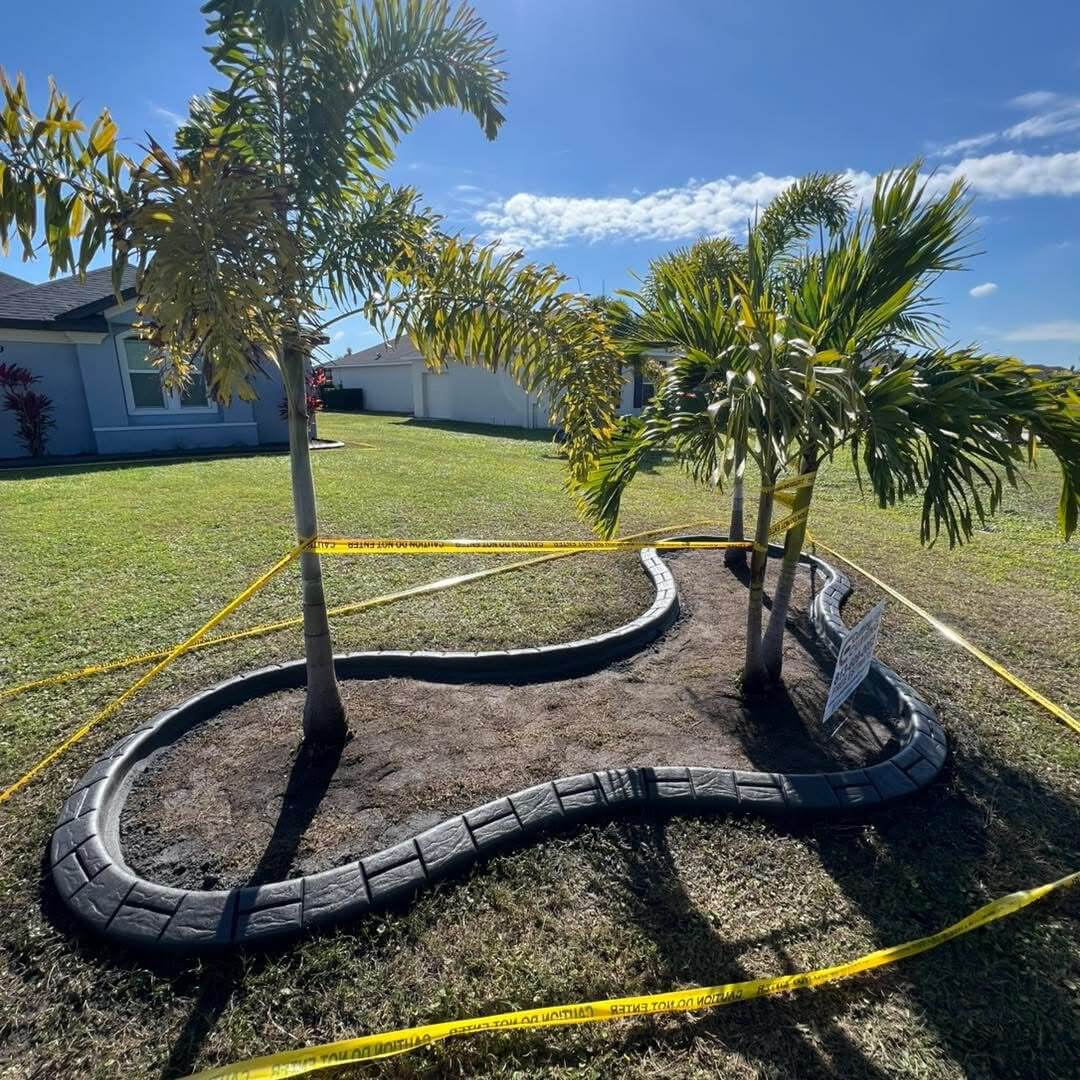
This installation shows how poured curbing can maintain one consistent line around larger landscape features. That continuous line is one of the main reasons homeowners compare concrete curbing with plastic edging, metal edging and segmented paver borders before choosing a permanent landscape edge.
- Best fit: larger planting beds, palms, islands and custom bed shapes.
- Planning note: longer runs should account for access, grade changes, drainage and where the curb should stop cleanly.
- Related guide: concrete landscape curbing cost guide.
What to look for in concrete curbing photos
When comparing project photos, look beyond color. The best curbing installations have clean transitions, consistent curves, sensible termination points and a profile that fits the property. The curb should improve the bed shape and maintenance edge without looking forced.
| Photo detail | Why it matters |
|---|---|
| Curve shape | Shows whether the curb follows the bed naturally instead of creating awkward bends. |
| Profile height | Affects appearance, mulch containment and how easy the edge is to maintain. |
| Color contrast | Helps decide whether the curb should stand out or blend into the landscape. |
| Stamped texture | Adds a decorative look but should still match the home and hardscape. |
| Stopping points | Clean endings make the installation look planned instead of cut off. |
Planning your own curb layout
Save the examples that best match your property, but plan the final profile and color around the home’s materials, sunlight and existing hardscape. Coastal Edge confirms the actual curb line during the site visit so the layout, finish and estimate are based on the real property.
Homeowners comparing options can review concrete curbing vs plastic edging, concrete curbing vs metal edging and concrete curbing vs paver edging before choosing a border.